
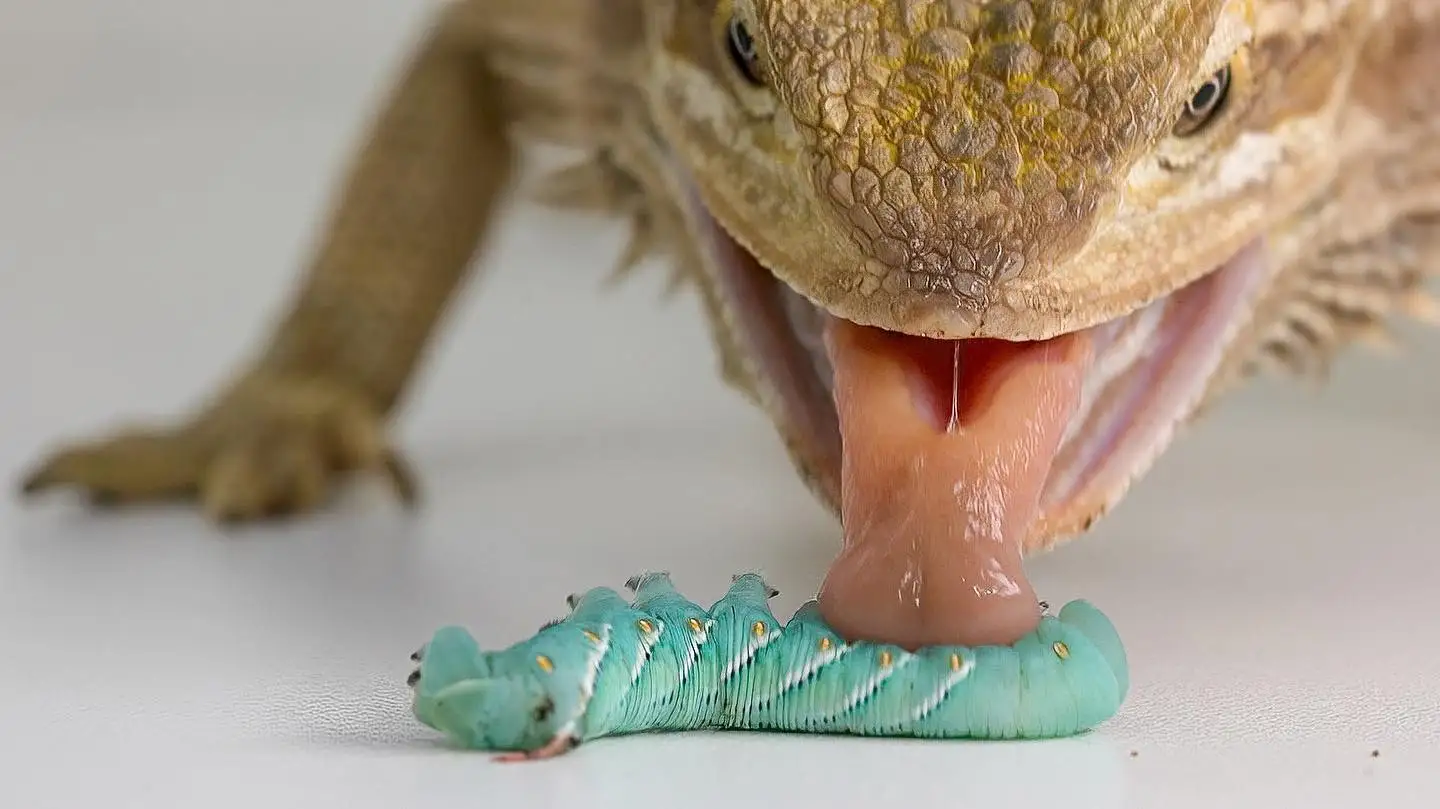
Your pet's health is at stake.
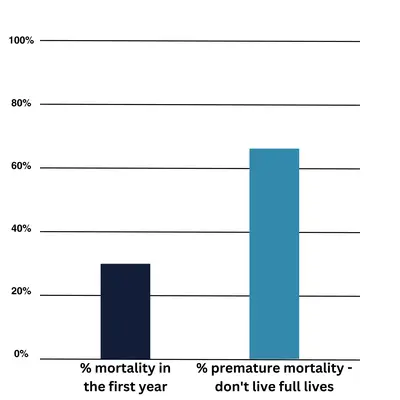
The research is clear. Something we're doing is wrong.

“Many reptiles and amphibians die prematurely; malnutrition is often a factor in this early demise.”
Experts agree: it's diet.
Poor diet is the biggest single contributor. Even dedicated owners struggle with it, because the right diet is not obvious and the wrong one looks fine for a long time.
“But my pet seems fine, so I must be doing okay.”
That's the problem. Poor diet has no early warning. By the time you can see it, it's already serious.
Three questions.
If the answer to any of these is no, your pet is at risk of a nutritional illness. Most owners answer no to at least one.
Feed Them The Right DietOne or two is not a diet. Every feeder is strong at some things and weak at others.
A three-month-old and a twelve-month-old need different amounts and different sizes. Most owners guess.
Calcium deficiency is the most common health problem in pet reptiles, and it's invisible until it isn't.
One insect isn't a diet.
Most pets are fed one or two feeders. Just like our food, every insect carries a different set of nutrients, so one insect can't cover a reptile's needs no matter how many you feed.
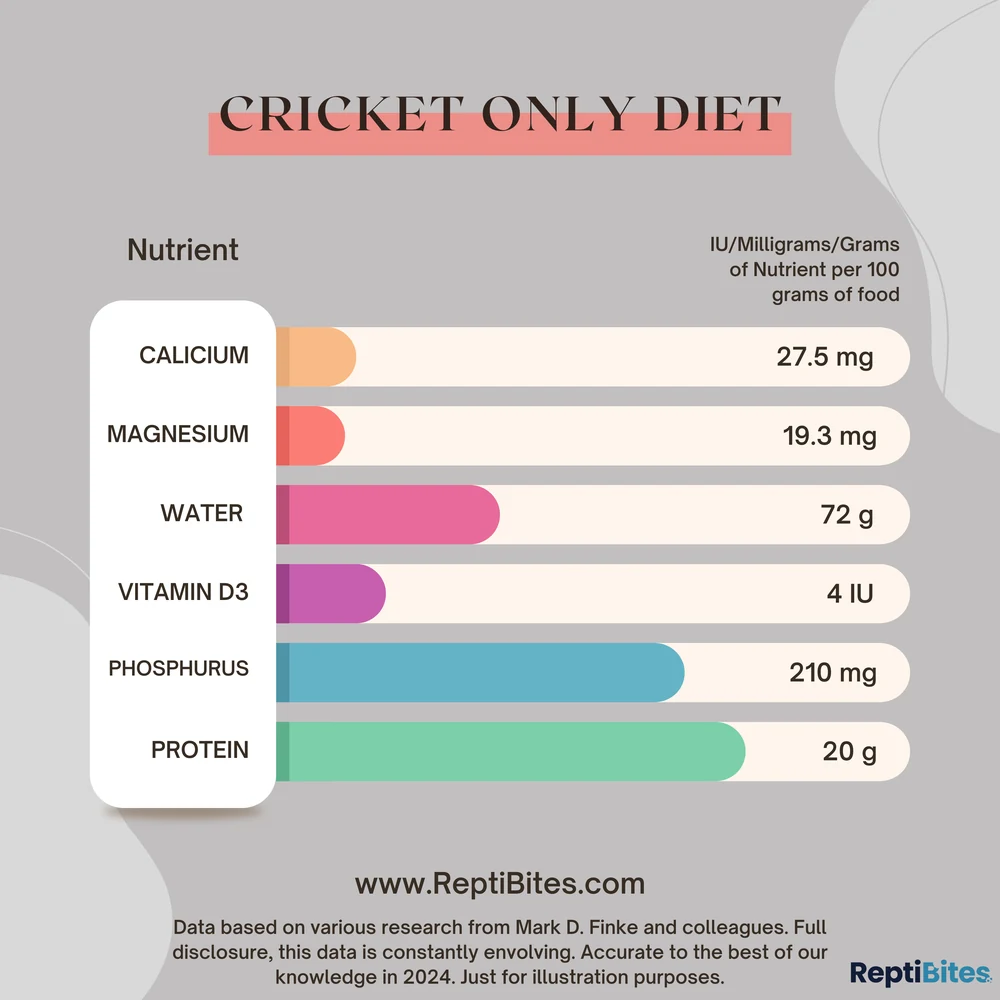
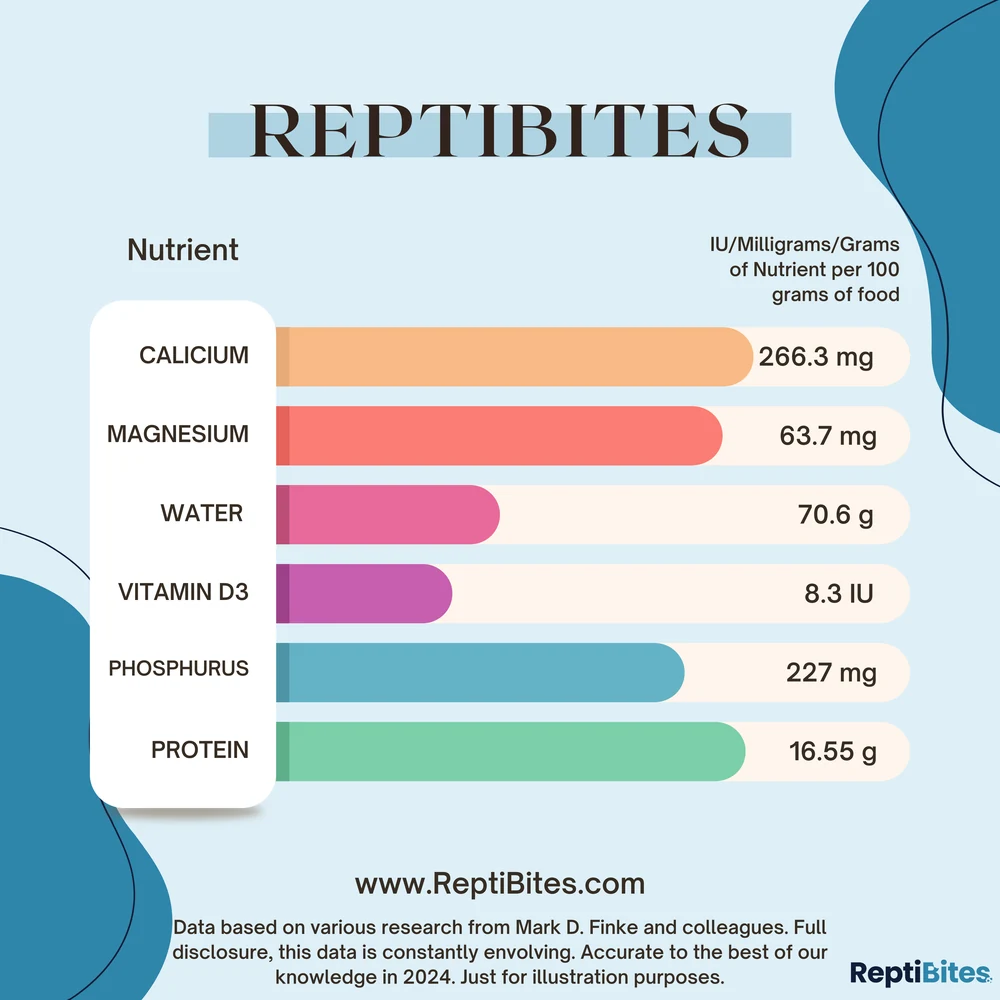
Supplements can hold a baseline. They are not a replacement for the right food. No doctor would call a multivitamin a fix for a bad diet.
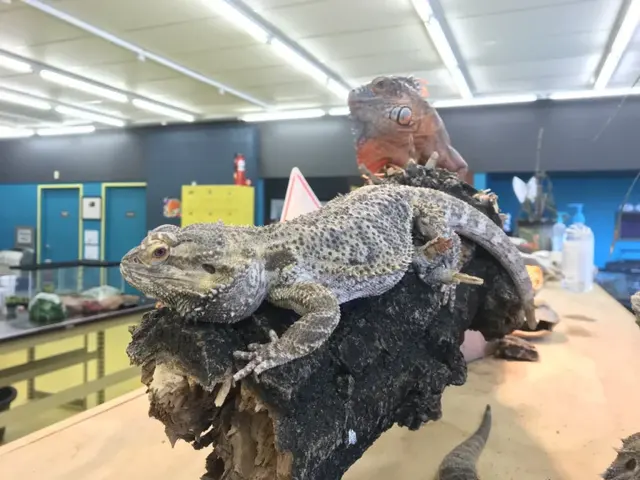
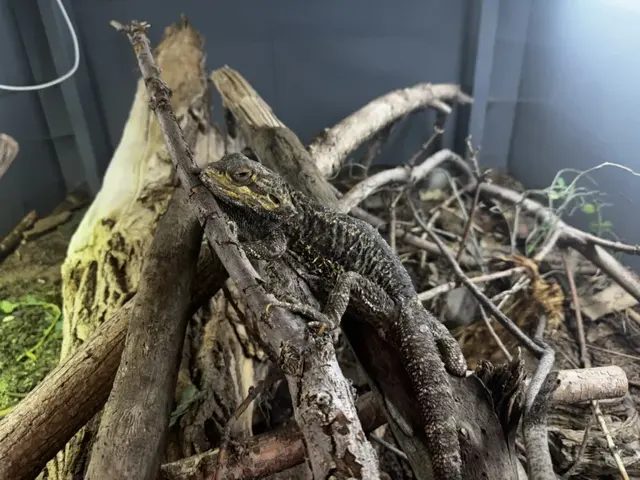
Lucky.
Lucky's first family fed him nothing but crickets, in the wrong setup. When he was re-homed to My Nature Lab, an educational non-profit, he was badly overweight with a serious case of metabolic bone disease.
Once his setup was fixed, the team moved him to a complete, diverse diet of insects and greens. His condition turned around.
He's still going at 15, well past the usual lifespan of a captive dragon. Lucky is one animal, but he is what the research says: there is no replacement for the right diet, and it is never too late to start it.
The right diet.
Done for you.
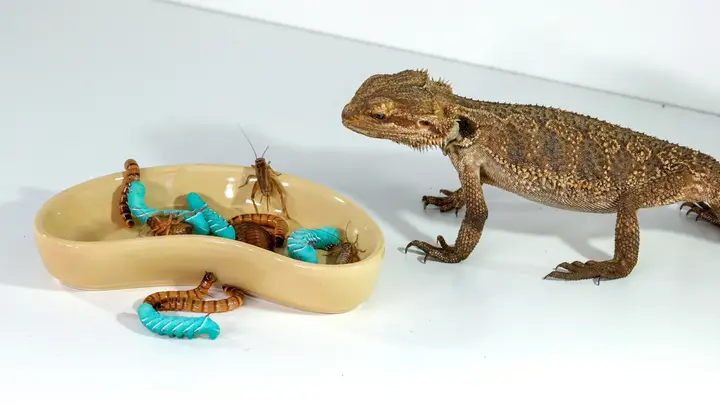
ReptiBites is a monthly box of lab-tested feeders, portioned for your animal, with a guide that tells you what to feed each day. You open the box. We've done the rest.
Delivered.
No store trips, no last-minute orders, no keeping a colony. Fresh feeders arrive on a schedule, gut-loaded and sealed.
Portioned for your pet.
Species, age, and size decide what goes in the box. Portions change as they grow, without you doing the maths.
Guided.
You'll know exactly what to feed, every day: a Feeding Guide in your account, or a printed day-by-day schedule in every Premium box.
Lab-tested.
Every quarter an independent lab tests our feeders for nutrition and heavy metals. Ten times the calcium of an all-cricket diet at the same calories. No detectable lead, arsenic or mercury.
The easiest way to feed your reptile a proper diet. It also happens to be the best one.
Customers (and their pets) love ReptiBites.
“They do a really good job fitting insects to your reptile's age. They also send you a feeder guide on what to feed when. They go by weight, so a lot of the time you get more than they say they'll send.”
“I love bearded dragons, but I despise bugs. There's no chance I'm keeping colonies of them. I get a weekly meal box for my family, so this seemed like a no-brainer.”
“It's a life saver and my beardie loves it. Thank you for helping me feed Draco healthier food. He loves it and so do I.”